

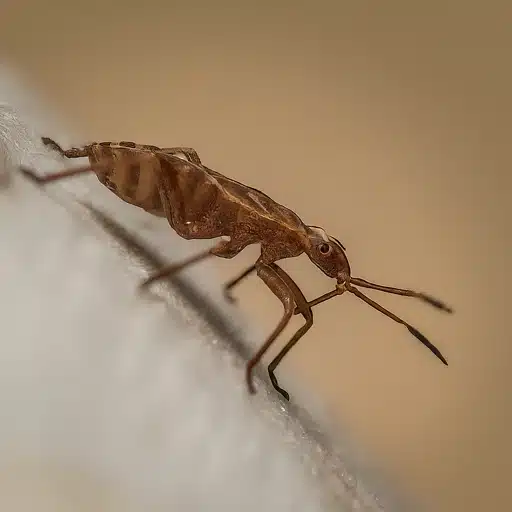

Bed bugs are among the most frustrating pests Oklahoma homeowners can encounter. These small insects hide in furniture, mattresses, bed frames, and other protected areas, making them difficult to locate and eliminate. Unlike many household pests, bed bugs are not attracted to leftover food or dirty kitchens. They feed on blood and are primarily attracted to sleeping people by body heat, carbon dioxide, and other cues. A bed bug infestation can happen in almost any home, regardless of how clean or well-maintained it is. If you suspect bed bugs are living in your house, contacting an experienced Broken Arrow exterminator can help you identify the problem and determine the most appropriate treatment. Understanding what bed bugs look like, where they hide, and how they reproduce is the first step toward controlling an infestation.
Adult bed bugs are small, flat, oval-shaped insects that typically measure about one-quarter of an inch long. Their bodies are usually reddish-brown, although their appearance changes somewhat after feeding. Before feeding, bed bugs have relatively flat bodies. After consuming blood, they become more swollen and elongated. Young bed bugs, called nymphs, are smaller and often lighter in color. Because newly hatched nymphs are tiny and pale, homeowners may have difficulty spotting them against certain surfaces. Bed bug eggs are even smaller. They are whitish and approximately one millimeter long. Females deposit eggs in protected locations, often near places where people sleep or rest. An infestation may include adults, nymphs, eggs, and shed skins. Finding any of these can help establish whether bed bugs are present.
One of the first things homeowners notice is unexplained skin irritation after sleeping. However, bites alone cannot confirm a bed bug infestation. Different people react differently to bites. Some develop itchy red marks, while others experience little or no visible reaction. Bed bug bites can also resemble reactions caused by other insects or skin conditions. More reliable evidence includes finding actual bed bugs, their eggs, shed skins, or characteristic dark fecal spots. These spots may appear on mattress seams, bed frames, bedding, or nearby furniture. Homeowners sometimes discover small bloodstains on sheets, although these are not exclusive to bed bugs. A substantial infestation may also produce an unusual odor, but smell alone is not a reliable identification method. A professional inspection can help distinguish bed bugs from other insects that may look similar.
Bed bugs are excellent at hiding. Their flattened bodies allow them to squeeze into narrow cracks and crevices. Common hiding locations include mattress seams, box springs, headboards, bed frames, and upholstered furniture. They may also shelter behind baseboards, inside furniture joints, beneath loose wallpaper, or around other protected spaces. Despite their name, bed bugs are not limited to beds. They can establish hiding places in couches, recliners, nightstands, and other furniture near resting areas. As infestations grow, insects may spread farther from their original hiding locations. This behavior makes careful inspection important. Treating a mattress without addressing other infested locations may leave enough surviving insects for the problem to continue.
Bed bugs develop through incomplete metamorphosis. Their life cycle includes eggs, five nymphal stages, and adults. Nymphs generally need a blood meal before progressing to the next developmental stage. After feeding and developing, they molt by shedding their outer covering. These discarded skins may accumulate around hiding places and provide evidence of an infestation. Adult females can lay multiple eggs over time when conditions and feeding opportunities are favorable. The rate of development depends on factors including temperature and access to blood meals. Under favorable conditions, bed bug populations can increase substantially. This is one reason early identification and treatment are important. A small infestation may be easier to manage than one that has spread throughout several rooms.
Yes. Bed bugs can move between rooms by crawling, but people also transport them accidentally. They may hide inside luggage, clothing, furniture, and other personal belongings. Apartment buildings and other multiunit properties can present additional challenges because bed bugs may move between adjoining spaces. Moving infested furniture without precautions can spread insects to previously unaffected areas. Homeowners should avoid carrying potentially infested belongings throughout the house unnecessarily. Items that can safely be treated using appropriate heat or laundering procedures should be handled carefully. When an infestation is suspected, professional guidance can help prevent actions that make the situation worse.
Bed bugs are challenging because they hide effectively, reproduce over time, and may survive certain treatment attempts. Some populations have developed resistance to particular insecticides. Eggs may also be less susceptible to some products than exposed insects. As a result, a single treatment is not always sufficient. Store-bought sprays may kill bed bugs that are directly contacted without reaching insects hidden inside furniture or structural gaps. Improper applications can create unnecessary exposure risks without resolving the infestation. Total-release foggers, sometimes called bug bombs, are generally not recommended as a primary bed bug treatment because they may fail to reach insects in hiding places. An experienced Broken Arrow exterminator can evaluate the infestation and select an appropriate treatment strategy.
Professional bed bug control usually begins with a detailed inspection. The technician looks for live insects, eggs, shed skins, and evidence of activity. Treatment options may include carefully selected insecticides, localized heat applications, steam, and other methods. Different products and methods address different parts of the infestation. Steam can kill bed bugs and eggs when sufficient heat reaches them, but effectiveness depends on proper application. Certain residual insecticides may help control insects that contact treated surfaces after application. Some professional programs also incorporate biological products containing insect-pathogenic fungi. The appropriate combination depends on the infestation, property, and product labels. Follow-up inspections or treatments may be necessary because surviving insects or newly hatched nymphs can continue the infestation. Homeowners should follow preparation instructions and observe all reentry requirements.
Proper preparation can make professional treatment more effective. Your pest control technician may recommend reducing clutter around beds and upholstered furniture. Bedding and suitable clothing can often be washed and dried using temperatures appropriate for the materials. A hot dryer cycle can kill bed bugs when the items reach lethal temperatures for sufficient time. Clean items should be kept separate from potentially infested belongings. Vacuuming may remove some insects, but it should not be considered a complete treatment. Vacuum contents should be contained and disposed of carefully to reduce the chance of insects escaping. Avoid throwing away furniture without first discussing the situation with your technician. Discarding furniture is not always necessary and can spread bed bugs if items are moved improperly.
If you discover live bed bugs, eggs, or other convincing evidence, professional assistance is worth considering. Early treatment can help reduce the likelihood of an infestation becoming more widespread. At TermMax Pest Control, we help homeowners in Broken Arrow and surrounding Tulsa-area communities address bed bug problems. Our approach focuses on identifying the infestation, selecting appropriate treatment methods, and helping customers understand what to expect. Bed bugs can be persistent, but a carefully planned treatment program can bring an infestation under control. If you suspect bed bugs are living in your home, contact TermMax Pest Control today to schedule an inspection.