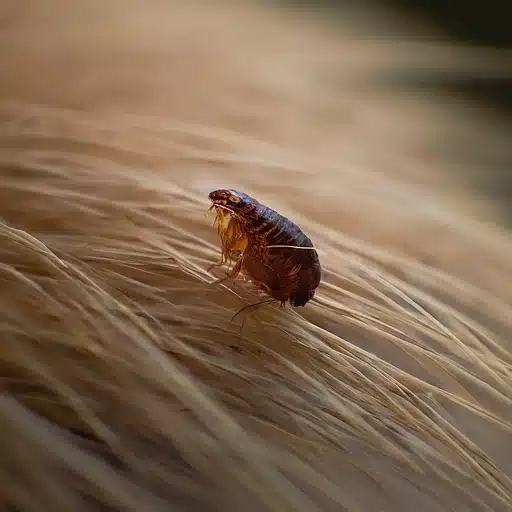



In many American homes, we have an addition to our families: our fur babies. Dogs and cats are very important parts of our family, and they are family members we want to keep safe. One of the insects that can cause problems for them is fleas. These insects get into their fur and bite them, creating an uncomfortable situation. Fleas can also transmit disease organisms and cause other health problems. It’s important that if you think you have fleas in your home or on your pets, you contact a good Tulsa Exterminator to eliminate them.
Let’s take a look at fleas and how they work. Fleas develop through complete metamorphosis: egg, larva, pupa, and adult. Adult female fleas lay eggs while living on a host animal, but the eggs are not firmly attached to the fur and commonly fall into the animal’s environment, especially sleeping and resting areas. University of Florida entomology information explains the cat flea life cycle and its relationship with pets and their environment.
The eggs eventually hatch and larvae emerge. These worm-like larvae live in the environment rather than on the pet. They feed on organic debris, including adult flea feces, commonly called flea dirt, which contains partially digested blood. As the larvae develop, they eventually pupate inside a cocoon. During this stage they develop into adults.
Adult fleas can remain protected in the pupal cocoon until conditions signal that a possible host is nearby. Heat, movement, and other environmental cues can help stimulate adult emergence. Once emerged, fleas use their powerful hind legs to jump onto a passing host. Fleas can jump many times their own body length. Their jumping ability comes from specialized hind-leg structures and elastic energy storage that allows them to launch rapidly. Once on the host, claws on their legs help them hold onto hair and remain on the animal.
Fleas are more than an irritation. They feed on blood, their bites can cause itching and allergic reactions, and fleas can be involved in transmitting certain disease organisms and parasites. The U.S. Centers for Disease Control and Prevention provides information about fleas, flea bites, and flea-borne disease.
If you think your animal has fleas, the first step is to get in contact with a good veterinarian. They’re going to give you the proper tools to eliminate fleas from the body of your dog or cat. Depending on the animal and situation, veterinarians can recommend appropriate flea-control products and treatments.
Once the pet is being treated, it’s important to contact a good Tulsa Exterminator to take care of the rest of the problem in the home and, when appropriate, the yard. Because flea eggs, larvae, and pupae can be present away from the animal, dealing with the environment is an important part of eliminating an infestation.
If you think you have fleas or any other pest-control issue, call a good Tulsa Exterminator today. Here at TermMax Pest Control, we specialize in these kinds of treatments and can help deal with the pest problem you’re up against. Call us today.