

Wasps are a normal part of Oklahoma’s outdoor environment, but they can become a serious concern when they build nests close to people. A nest beside a front door, under an eave, near a deck, or around a children’s play area can put family members and visitors close to defensive wasps every day. If wasps are repeatedly showing up around a high-traffic area of your property, a Broken Arrow Exterminator can help identify what is happening and determine whether professional control is appropriate.
Wasps are not simply pests. Many species are beneficial predators that help control other insects and arthropods, and some also visit flowers for nectar and contribute to pollination. The goal around a home is not to eliminate every wasp outdoors. Instead, the concern is managing nests and activity that create an unacceptable sting risk around people and pets. Oklahoma State University Extension provides information about common wasps and bees, their nesting behavior, and management around homes.
Why Wasps Build Nests Around Homes
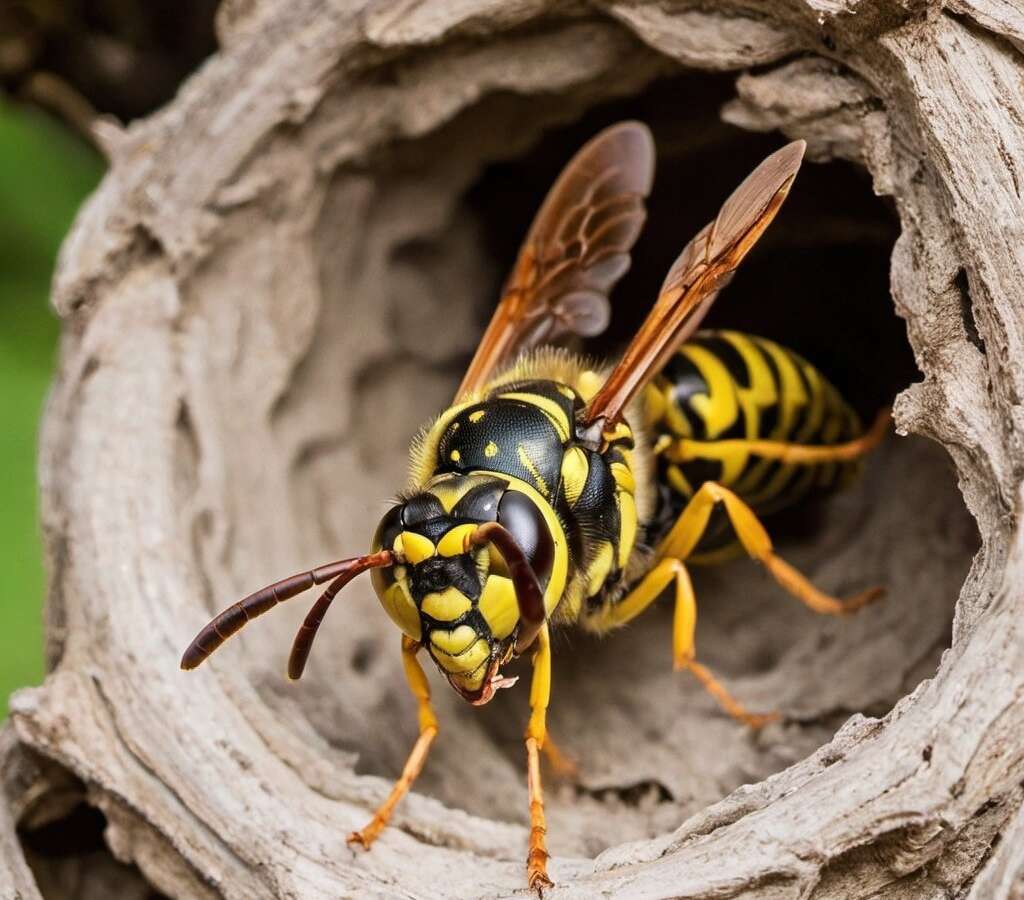
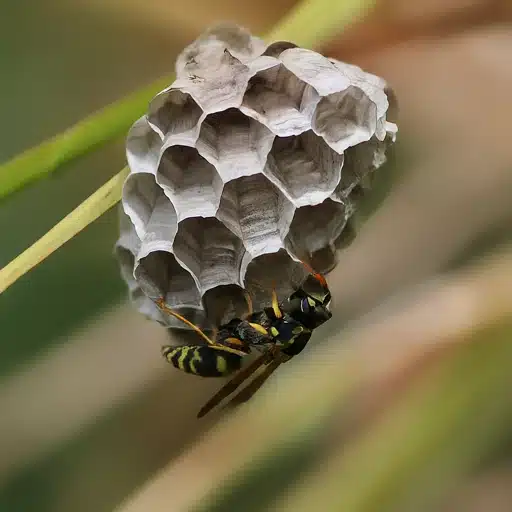
Homes provide many protected places where wasps can establish nests. Depending on the species, nests may be found under roof eaves, inside wall voids, beneath decks, around sheds, in trees and shrubs, or in holes in the ground. Some species build exposed paper nests, while others use concealed cavities where the nest itself may be difficult to see.
That difference matters when deciding how to handle the problem. A few wasps visiting flowers in the yard is very different from a steady stream of wasps entering a hole beside a doorway. Repeated traffic to and from one location can indicate that a nest is nearby, even when the nest is hidden inside a wall or another protected space.
Why Wasps Sting
Wasps generally are not searching for people to attack. Problems often happen when people accidentally get too close to a nest or disturb it. Social wasps can defend their colony when they perceive a threat. Mowing, trimming shrubs, moving outdoor furniture, opening a gate, or simply walking near a poorly located nest can sometimes bring a person close enough to trigger defensive behavior.
Unlike honey bees, many wasps are capable of stinging more than once. A sting usually causes immediate pain, redness, and swelling. Reactions vary from person to person. For someone with an allergy to insect venom, a sting can cause a severe systemic reaction that requires emergency medical attention. MedlinePlus, a service of the U.S. National Library of Medicine, provides first-aid and emergency guidance for bee, wasp, hornet, and yellow-jacket stings.
Signs You May Have a Wasp Nest
The easiest sign to notice is repeated wasp activity in the same area. Watch from a safe distance rather than approaching the insects. If multiple wasps repeatedly fly to the same eave, crack, opening, shrub, or ground location, there may be a nest associated with that spot.
You may also see a visible paper nest. Some nests begin small and become larger as the colony grows. Others remain concealed, so the flight pattern of the wasps is the main clue. Never put your face or hands close to an opening to see whether insects are inside. If the location is difficult to inspect safely, leave it alone and have a professional evaluate it.
Does Every Wasp Need Treatment?
No. An occasional wasp crossing the yard or feeding on nectar does not necessarily indicate a pest problem. Wasps have useful ecological roles, and eliminating insects that are simply passing through is usually unnecessary. Location is one of the biggest factors in deciding whether a nest needs attention.
A nest far from normal human activity may present little risk. A nest beside a frequently used entrance, patio, playground, mailbox, walkway, or work area is different. The species, nest location, amount of activity, and people using the area should all be considered. Homes with someone who has a known severe sting allergy deserve particular caution.
Be Careful With DIY Wasp Control
Trying to knock down or spray an active nest can cause defensive wasps to leave the nest rapidly. This can be especially risky when the nest is overhead, concealed, difficult to reach, or located where the person treating it has no easy escape route. Ground-nesting colonies can also be difficult to recognize until someone is already close to the entrance.
Another problem is identification. Homeowners may use the word “wasp” for several different stinging insects, but their nesting habits and behavior can differ considerably. Correct identification helps determine whether treatment is necessary and how the nest should be approached.
What a Broken Arrow Exterminator Can Do
A professional inspection starts by determining where the wasps are coming from, what type of nesting situation is present, and whether the activity creates a meaningful risk. The treatment approach depends on the species and nest location. An exposed paper nest under an eave is a different situation from insects entering a wall void or a colony located underground.
Professional control also allows the area to be evaluated for conditions that may encourage future nesting. After a nest is no longer active, appropriate openings may sometimes be sealed or repaired to reduce access to protected structural spaces. Timing matters, however, because sealing an opening while an active colony remains inside can create additional problems.
Protect Your Family Without Eliminating Beneficial Wasps
Wasps belong in the Oklahoma ecosystem. They can prey on other insects and contribute to pollination, so the objective should be sensible control rather than trying to remove every wasp from the property. The nests that matter most are the ones that place defensive insects in direct conflict with people.
If you are seeing repeated wasp activity, have discovered a nest near a high-traffic area, or are unsure what kind of stinging insect is around your home, TermMax Pest Control can help. A Broken Arrow Exterminator can inspect the situation, identify the problem, and recommend an appropriate solution. Give TermMax Pest Control a call today if wasps are making it difficult to safely enjoy your home or yard.