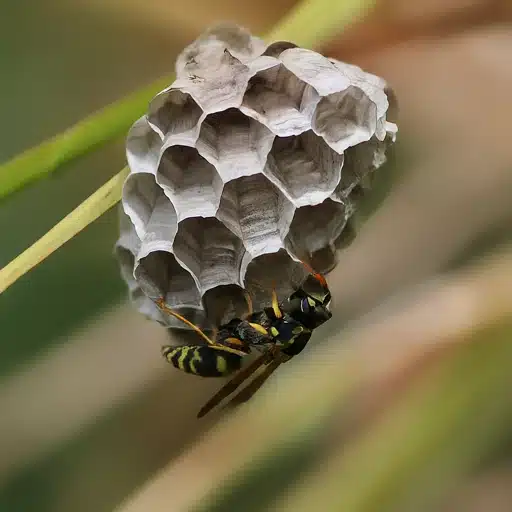


Wasps are common around Oklahoma homes, especially during the warmer months when colonies are active and people are spending more time outdoors. Most wasps you see flying through a yard are not a reason for alarm, but a nest in the wrong place can create a real sting hazard. Understanding where wasps nest, what attracts them, and when professional treatment makes sense can help homeowners make better decisions. If activity is concentrated around your house, a Broken Arrow Pest Control company can help determine whether a nest is creating a problem.
Wasps Have an Important Job Outdoors
Wasps are often viewed only as stinging pests, but many species provide useful benefits. Predatory wasps hunt insects and other arthropods that become food for their developing young. Adult wasps may also visit flowers for nectar and can transfer pollen while feeding. Oklahoma State University Extension explains the biology, nesting habits, and management of common wasps and bees.
Because wasps have a place in the ecosystem, seeing one outdoors does not automatically mean treatment is needed. The bigger concern is where a colony chooses to nest. When a nest develops close to doors, walkways, patios, playgrounds, garages, or other areas people use regularly, accidental encounters become much more likely.
Common Places Wasps Nest Around a House
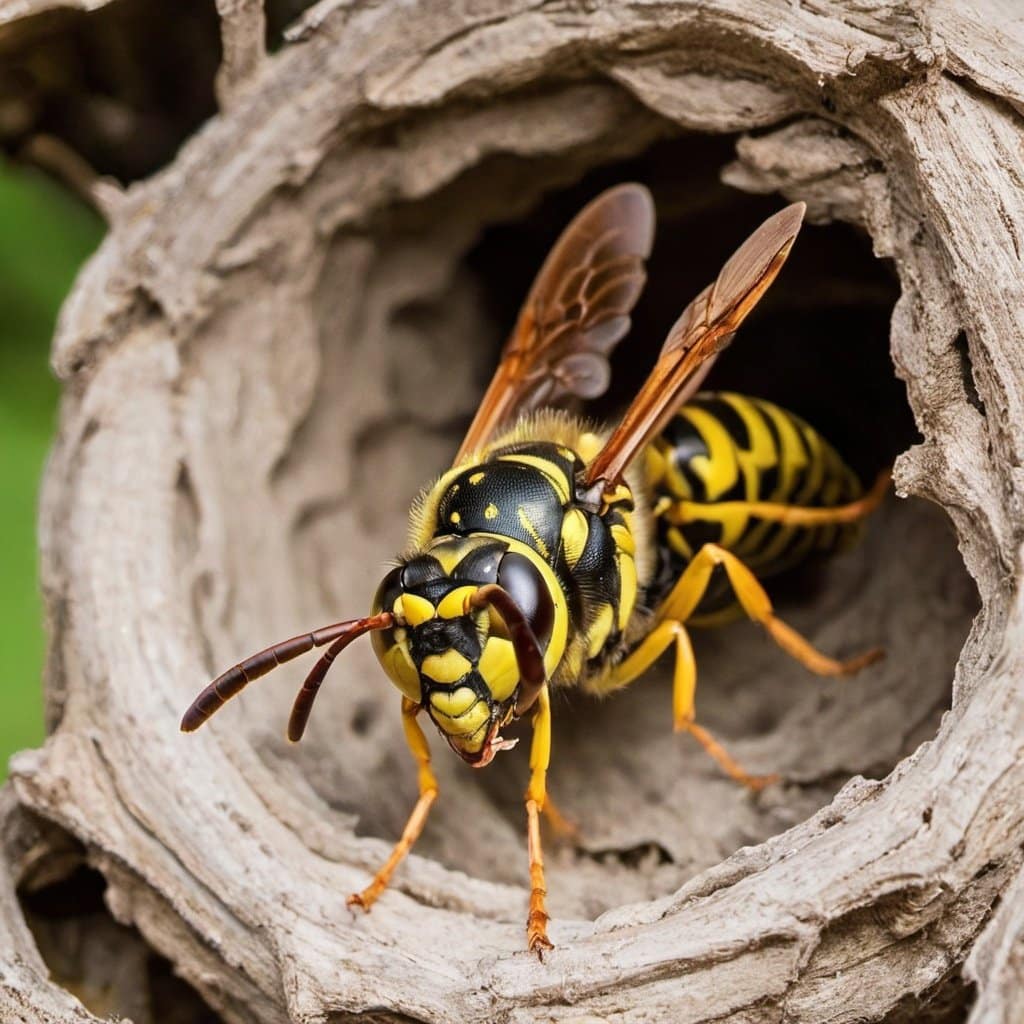
Different wasp species choose different nesting sites. Paper wasps may construct exposed nests beneath eaves, porch ceilings, deck rails, or other protected surfaces. Other social wasps may use enclosed spaces such as wall voids, structural gaps, or underground cavities. This is one reason identification and inspection are important before deciding how to address the activity.
A hidden nest may first become noticeable because wasps repeatedly travel to the same opening. You might see insects disappearing beneath siding, entering a crack, moving through a gap around a roofline, or flying into a hole in the ground. Watching that traffic from a safe distance can provide useful information without disturbing the colony.
Why a Wasp Nest Can Become Dangerous
Social wasps defend their nests. Someone may be able to walk through a yard without any problem until a mower, weed trimmer, ladder, ball, pet, or person gets too close to the colony. Once wasps perceive the nest as threatened, defensive behavior can increase quickly.
Stings are painful and normally produce redness and swelling around the site. Some people, however, can experience a severe allergic reaction. Symptoms involving breathing difficulty, swelling of the face or throat, dizziness, or other serious systemic reactions require immediate emergency medical attention. MedlinePlus from the U.S. National Library of Medicine provides guidance on reactions and first aid for bee, wasp, hornet, and yellow-jacket stings.
Reduce Conditions That Attract Wasp Activity
Homeowners cannot prevent every wasp from entering a yard, but some simple practices can reduce unnecessary attraction. Keep outdoor trash containers closed, clean up sugary drink spills, and avoid leaving food exposed during outdoor gatherings longer than necessary. Fallen fruit and other food sources can also attract some stinging insects.
Regularly inspecting the exterior of the house can help you notice new nests while they are still small. Look beneath accessible eaves, around porch areas, near sheds, and around other protected locations without getting close to active insects. Small gaps in structures may also provide access to concealed nesting sites. Appropriate repairs can reduce future access, but active openings should not simply be sealed while a colony is still using them.
Why Spraying the Wasps You See May Not Solve the Problem
Killing individual wasps flying around a property does not necessarily address a nearby colony. If dozens or hundreds of insects are associated with a nest, removing a few workers does little to change the source of the activity. Effective control depends on locating and appropriately addressing the nest when treatment is warranted.
Attempting to spray, strike, burn, flood, or knock down a nest can also provoke defensive behavior and increase the chance of being stung. Nests that are high above the ground, inside structures, or underground can present additional problems. A homeowner should not put themselves on an unstable ladder or into the middle of an active colony simply to reach a nest.
Identification Matters
Not every flying insect around a home is the same. Paper wasps, yellowjackets, hornets, solitary wasps, and bees have different behaviors and nesting habits. Some solitary species may be relatively unlikely to defend a nesting area aggressively, while social colonies can react strongly when their nest is threatened.
Correct identification helps determine whether control is even necessary. It also helps a pest professional choose an approach that matches the species and nest location rather than treating every stinging insect situation exactly the same way.
When to Call Broken Arrow Pest Control
Professional help makes the most sense when a nest is located where people cannot reasonably avoid it, when insects are entering a structural void, when activity is heavy, or when safely reaching the nest would be difficult. Families with someone who has a known severe insect-sting allergy should be especially cautious about attempting their own nest removal.
A Broken Arrow Pest Control professional can inspect the activity, determine the likely insect and nesting location, and decide whether treatment is appropriate. If treatment is needed, the method should be based on the species, location, and conditions around the property.
Keep Wasps in Their Place
Wasps can be beneficial when they are hunting insects and visiting flowers away from people. They become pests when their nesting behavior creates an unacceptable risk around the places where families live, work, and play. The goal is not to eliminate every wasp in the environment; it is to deal intelligently with colonies that are creating a problem.
If you have discovered a wasp nest or are seeing concentrated activity around your home, TermMax Pest Control can help. Our Broken Arrow Pest Control team can evaluate the situation and recommend an appropriate solution. Give TermMax Pest Control a call today if wasps are getting too close for comfort.