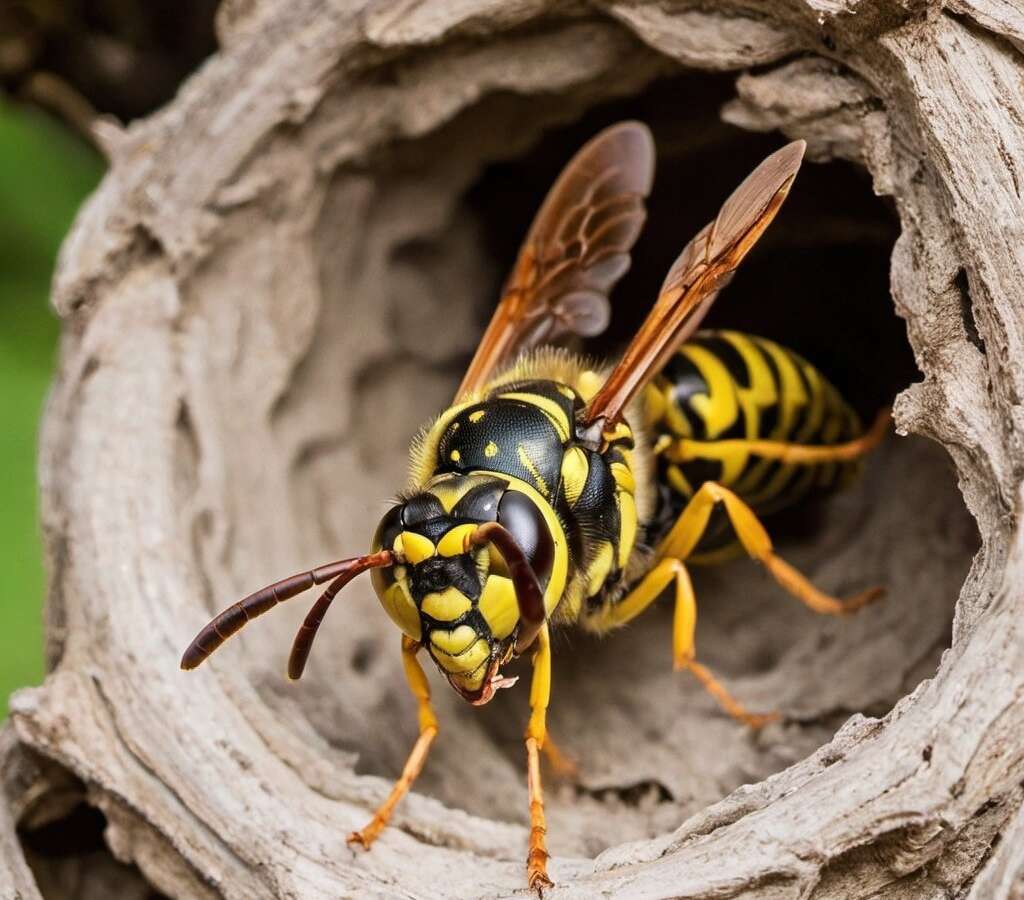

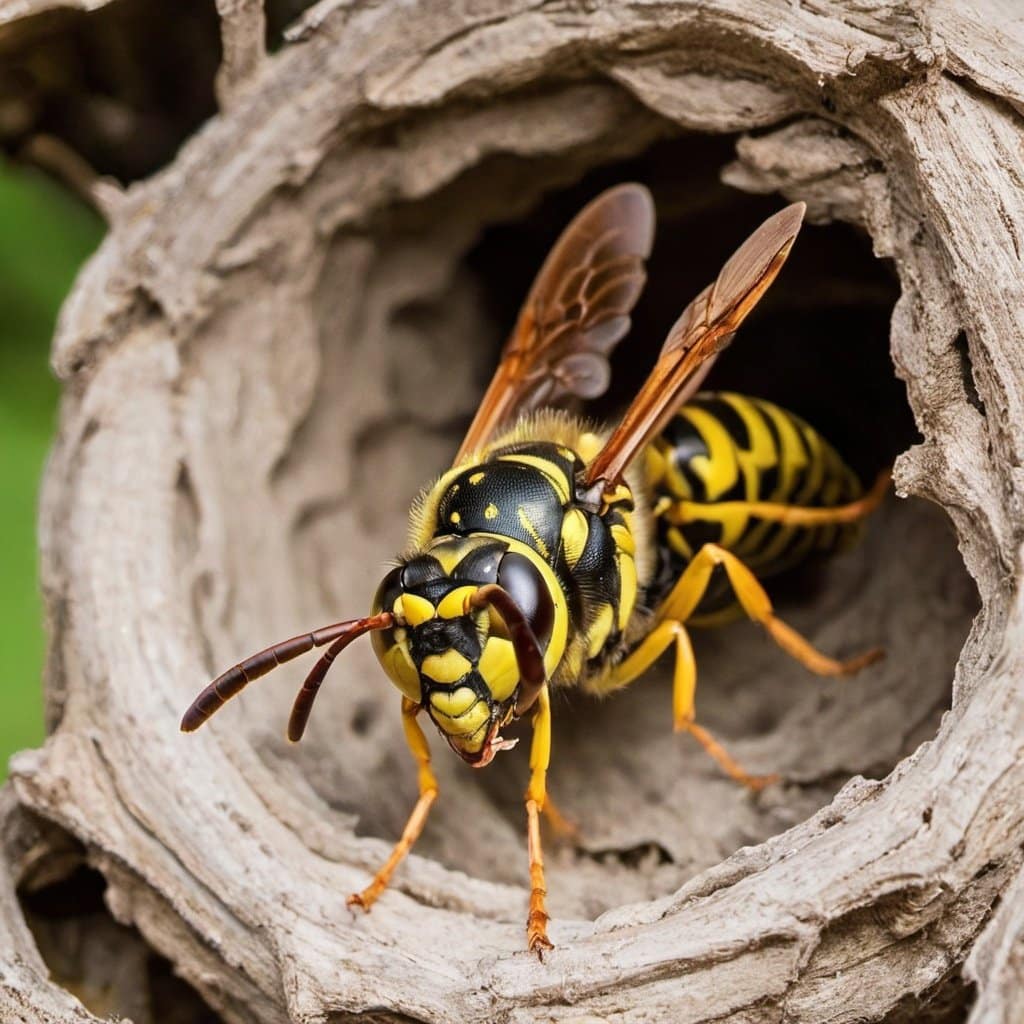

A lot of the wasp calls we get in Broken Arrow start the same way: somebody walks out the front door, looks up, and sees a nest tucked under the porch ceiling or along the eave. In the summer, that’s one of the first places wasps use around a house, and it’s an easy spot for your loved ones to get too close without meaning to.
Wasps can be a big nuisance on porches and in the yard once the weather warms up. They generally keep to themselves and don’t bother anything, but if you get close to their nests, they can become a real issue. That’s why it’s worth knowing what you’re looking at before anybody starts poking at it.
What You’re Likely Seeing
Wasps come in two categories: social wasps and solitary wasps. That difference matters when the nest is hanging over a doorway or a porch swing.
Paper wasps are a good example of social wasps. They build nests with many cells, and each nest holds multiple eggs, one egg per cell. Those are the open nests people notice under a porch or eave. Solitary wasps, like mud daubers, make single-cell nests with just one egg. The female uses her stinger to paralyze a spider or grub, carries it into the cell, lays an egg on top of it, and seals the cell. When the larva hatches, it eats the paralyzed insect and then emerges as an adult. Mud nests can show up on overhangs too, but they aren’t the same problem as a social nest.
Why a Nest Over the Door Is a Real Issue
Social wasps defend their nests aggressively. They sting prolifically, and there’s no limit to how many times they can sting. If you get too close to a social wasp nest, expect them to come after you. A nest over a porch or a back door is a problem because that’s where people walk every day.
The NYC Health page on wasps is a useful government resource on wasps around homes, including the advice not to approach a nest. The Maine Department of Agriculture, Conservation and Forestry fact sheet on yellowjackets and paper wasps is another official look at the social wasps people run into around a house.
Wasps Aren’t All Bad
Wasps aren’t all bad. When they aren’t feeding their young, they feed on nectar from blossoms, which makes them pollinators. A wasp working its way through your yard looking for nectar isn’t going to pick a fight with you. It’s the wasps defending a nest under the porch that you need to watch out for.
If Someone Gets Stung
If you’re allergic to wasp stings, or know you have an allergy, contact a medical professional immediately. A wasp sting can be life-threatening for someone with an allergy. If you’re not allergic, clean the wound, remove any stinger, and put a bandage on it. It should heal over the next few days.
When to Call for Help
If the nest is in a spot your loved ones can’t reasonably avoid, or you keep seeing more activity around the eave, it’s better to have it looked at than to climb up there yourself. That’s where Broken Arrow pest control can help, by figuring out what you’re dealing with and taking care of the nest so your family can use the porch again.
If wasps are causing problems around your Broken Arrow home, give us a call. We’ll take a look and tell you straight what we find.